Paul Rojanathara
We've always said that contemporary Thai culture was very under-reported here. Although many don't know more about Thailand than beaches and street food, what you can find in Thailand has the depth, quality and style to equal anything you can find in South Korea, Japan, Europe or the US.
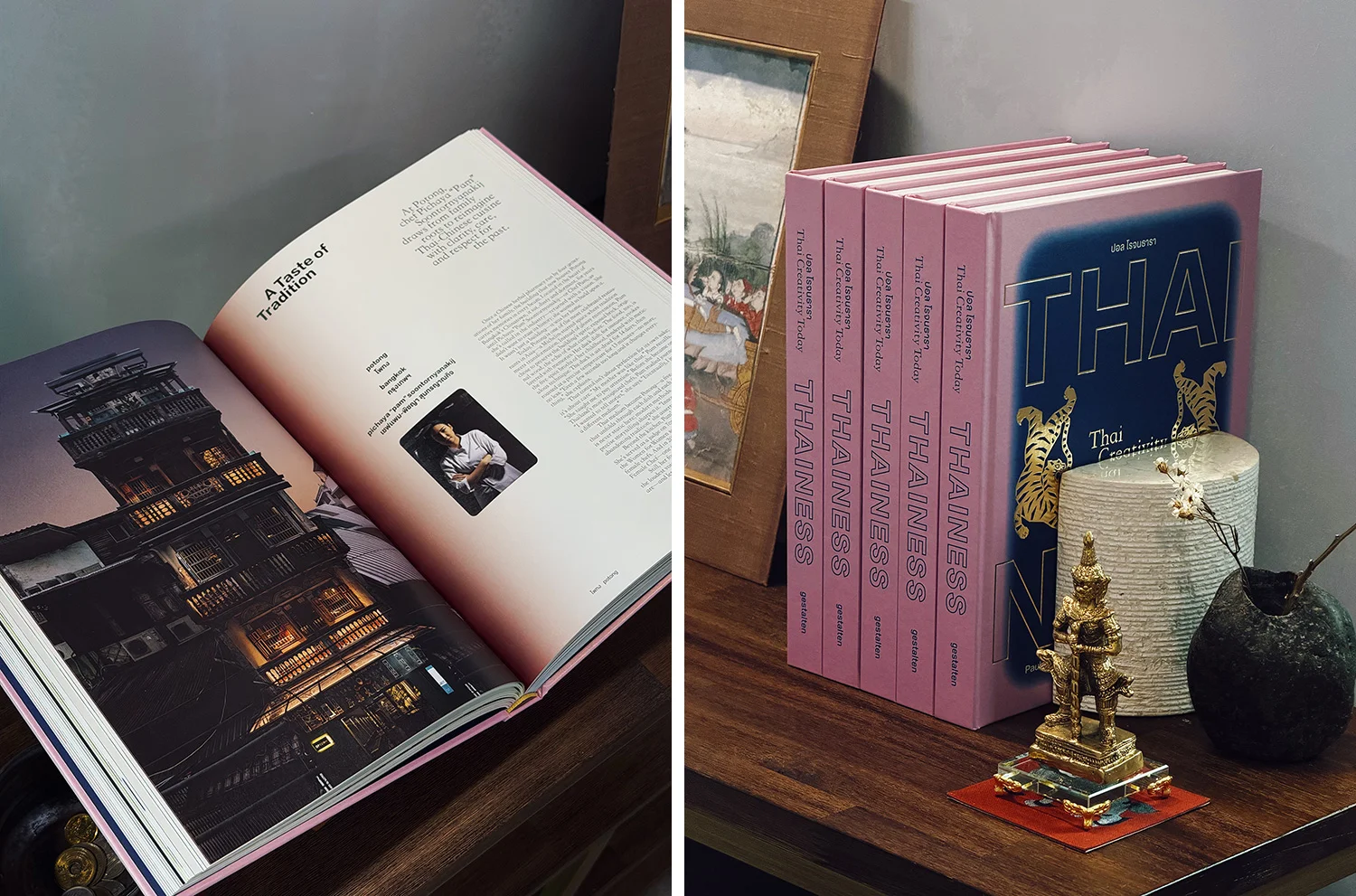
Our neighbours at Gestalten have obviously had the same thought and have just recently published a beautiful and timely book: Thainess: Thai Creativity Today, which documents the rise of Thai soft power onto the global stage and some of the people who have been part of that. The author, Paul Rojanathara, describes the heart of Thainess as "an effortless charm, deep-rooted creativity and openness to the world." We asked him more about it all.

Your book charts the rise of Thai soft power onto the global stage. The Fountain of Youth itself is a small example of this soft power; we went from a brand that simply made a product there, to being deeply inspired by what we find there in Thailand and understanding that there lies the real story of our brand. How do you think this blossoming confidence can be beneficial to the country as a whole?
I think confidence changes the way a country projects itself to the world.
For a long time, many Asian countries — Thailand included — were often seen through tourism, stereotypes, or surface-level imagery. But what’s happening now feels different. The interest is becoming deeper. People are becoming curious not only about the aesthetics of Thailand, but about the thinking behind it, the sensibility, the craftsmanship, the worldview. That shift creates long-term value because it changes perception.
Soft power is not only about visibility. It’s about resonance. When people connect emotionally with a culture — through food, design, music, hospitality, fashion, or movies — they begin to understand the country in a more nuanced way.
And what’s interesting in Thailand is that much of this momentum hasn’t come from a highly coordinated, top-down cultural strategy like we’ve seen in South Korea with “Hallyu”. In Thailand, a lot of it has emerged more organically through individuals, independent creatives, small brands, chefs, artists, filmmakers, musicians, and entrepreneurs building things from the ground up. That kind of organic cultural momentum tends to travel further because it feels real.
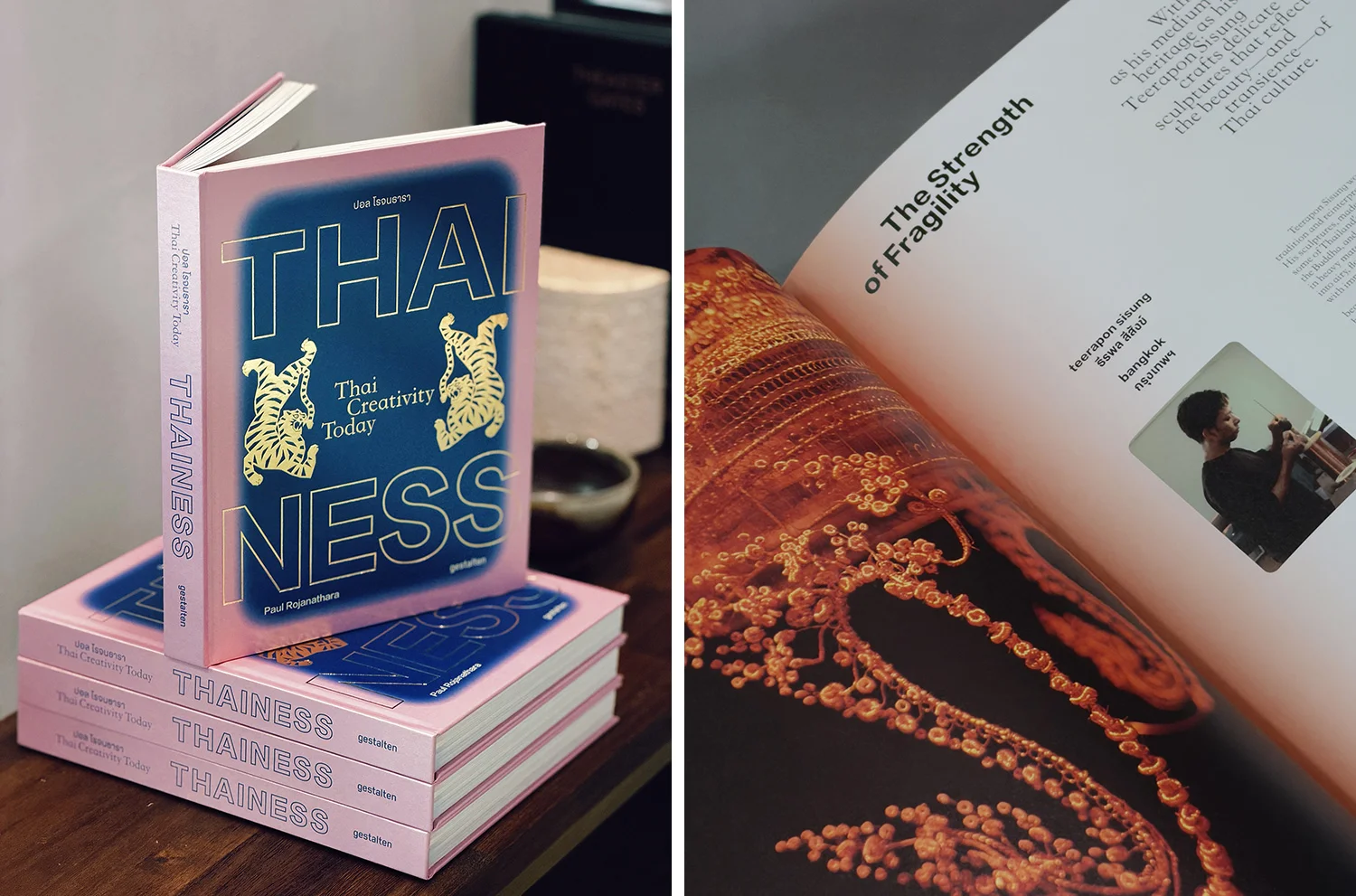
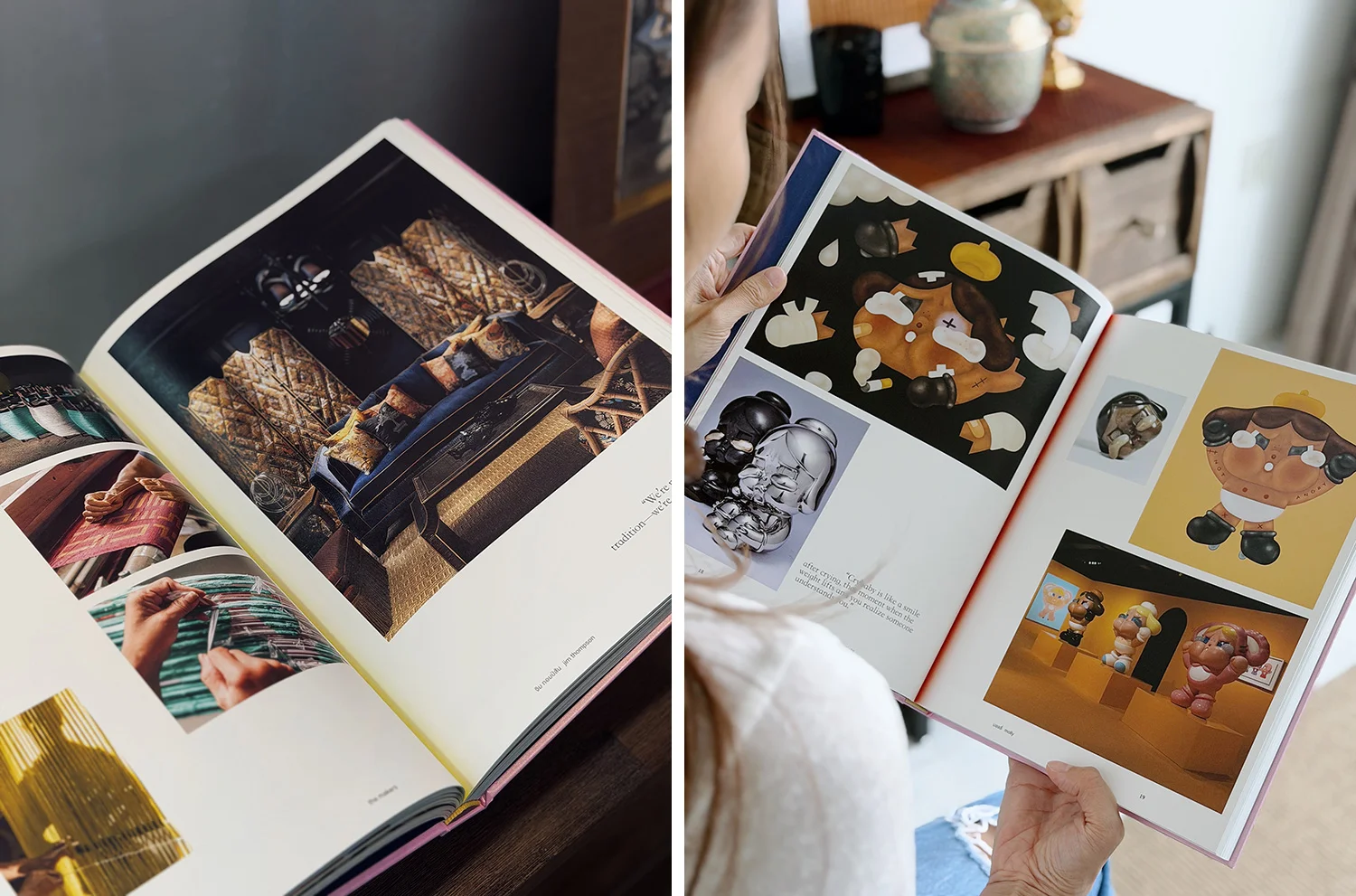
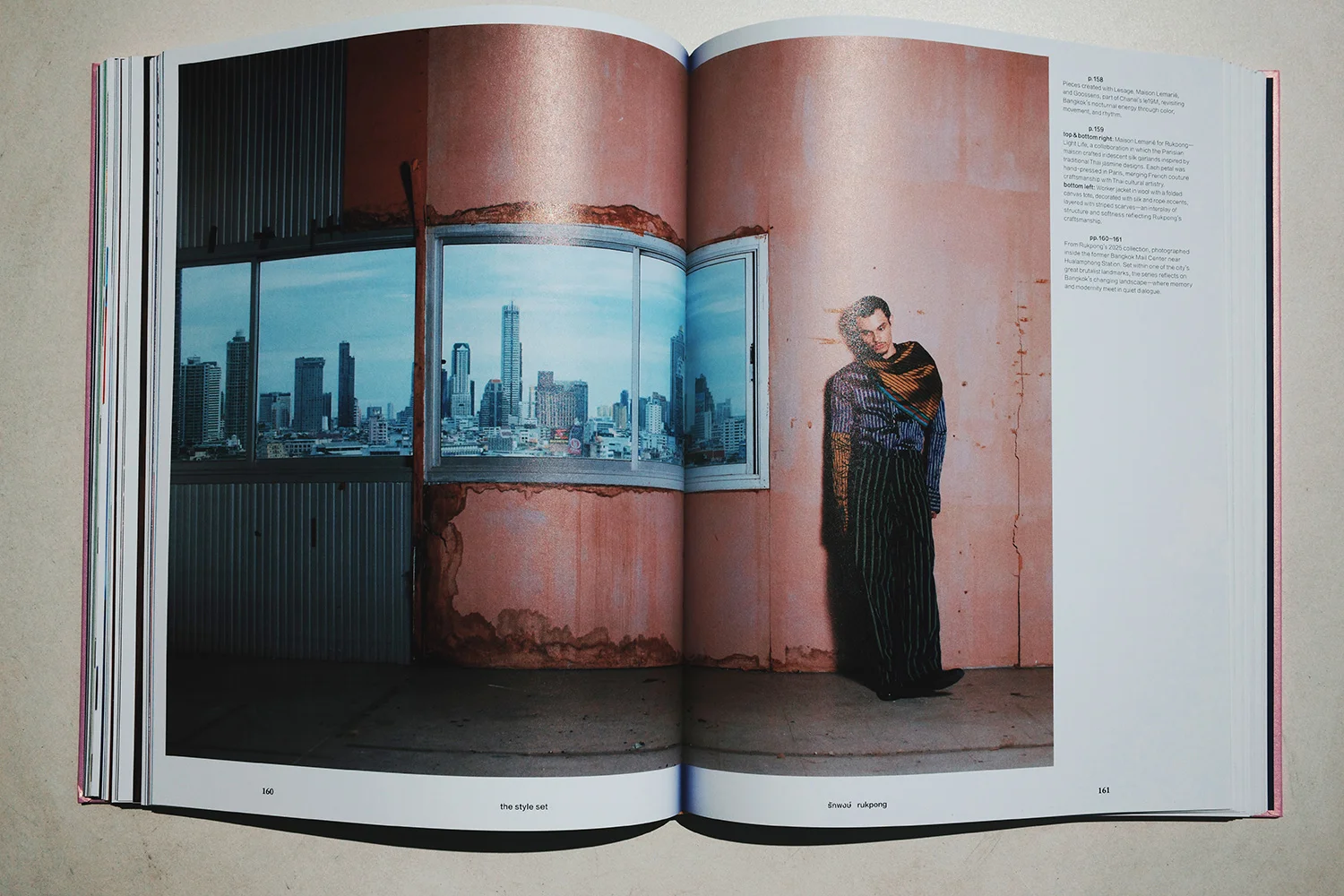
You tell of South Korea blazing the trail for the global reach of Asian culture and entertainment which opened the door for Thailand to walk through, initially in the form of K-pop group Blackpink's Lisa, who is of course Thai. Your book profiles some of the other artists, designers, craftspeople, musicians, actors, chefs and tastemakers who have also been part of the rise of Thai culture. Was it difficult to decide on who to feature? And do you have any tips for up and coming people that aren't quite ready for the book?
Yes, it was difficult, mainly because there were far more people I wanted to include than the book could realistically hold.
What interested me was not simply success or popularity, but perspective. I was looking for people whose work reflected something larger happening culturally in Thailand. Different disciplines, different generations, different ways of interpreting identity.
Some are globally visible figures. Others are operating more quietly but are equally influential within creative communities. Together, they create a broader picture of where Thai culture is moving.
As for younger creatives or people still emerging, I don’t think the goal should be to become “ready for the book.” The people who stand out most in Thailand right now are usually the ones focused on building something sincere rather than trying to fit into a trend or external expectation.
The strongest creative voices often emerge when people stop asking what the world wants from them and start developing a clearer understanding of who they are and what they want to contribute.

You write that "the rise of Thainess is not a passing trend or branding tool. It is a cultural arc rooted in a spiritual worldview, shaped by centuries of refinement, and now carried forward by a generation ready to interpret it on its own terms." Maybe you could expand on that a little bit and share some thoughts about where that arc might be heading?
What I meant is that Thainess is not something fixed. It’s not a logo, an aesthetic, or a nostalgic idea frozen in time. It’s something living. Something continuously interpreted by each generation.
Thailand has always absorbed influences from different cultures, religions, histories, and communities. But instead of losing itself through that process, it somehow transforms those influences into something distinctly its own. That’s why Thai culture often feels layered and difficult to categorize. There’s softness and intensity. Spirituality and humour. Precision and improvisation. Tradition and experimentation existing side by side.
I think the next phase of that arc will become even more multidimensional. Less dependent on external validation and more self-defined.
What’s emerging now is a generation that is no longer looking outward for permission to create. They are becoming more confident in building from their own references, their own lived experiences, their own cultural memory. And I think that confidence changes everything.
Artificial Intelligence is rocking the creativity and entertainment sectors. How do you see that playing out in Thailand? Could its rooting in craft and tradition insulate it somewhat?
AI will inevitably reshape the creative industries everywhere, including Thailand. But I think Thailand still has something very difficult to replicate artificially, which is sensibility.
A lot of Thai creativity is rooted in emotion, tactility, atmosphere, intuition, human relationships, spiritual understanding, and craftsmanship developed over generations. Those things are harder to automate because they are deeply tied to lived experience and cultural context.
AI may accelerate production, but culture is still created by humans. I actually think this could push Thailand even further toward valuing craft, materiality, and human touch — not as nostalgia, but as something increasingly rare and meaningful.
The countries and cultures that will stand out in the AI era may not necessarily be the ones producing the most content, but the ones capable of maintaining depth, identity, and emotional resonance.
In describing Thai Art, you say that it "folds emotion into form, satire into spiritual and memory into momentum. Its power lies not in choosing between reverence and rebellion but embracing both." It strikes me that you could say something similar of the society as a whole, with its embrace of contrast, contradiction and collision. Isn't that why it can be so compelling and fun to be there, part of the cocktail of its success and energy?
Yes, I think that tension is very much part of Thailand’s energy. Thailand can hold contradictions in a way many societies struggle to. Things don’t always need to resolve neatly into one singular identity. You can feel deep spirituality existing alongside playfulness. Sophistication next to chaos. Tradition beside experimentation. Formality mixed with humour. And somehow those collisions create vitality rather than fragmentation.
I think that’s part of why so many people feel emotionally attached to Thailand once they spend time there. It’s not only visually stimulating — it’s emotionally textured.
There’s a looseness and openness to life that allows different worlds to coexist.
That coexistence creates creativity because creativity often emerges from friction, overlap, and reinterpretation.

Beyond entertainment culture, I feel like there are some important things that we can learn from Thailand. For example, in Thailand, identity can be a wonderfully porous thing. A person can be Karen in their village and Thai in the market, or Thai and Chinese at the very same time. You see fluidity and flexibility in gender, sexuality and spirituality, where temples can house not just the Buddha but a whole cohort of religious characters from across Asia and other faiths... while we here are becoming increasingly rigid about our identities, less tolerant of what others believe and more likely to seek to define who can do what. What do you feel like the rest of the world could learn from looking at Thailand?
One thing Thailand reminds us is that identity does not always have to be rigid to be meaningful. There’s historically been a certain fluidity in how people navigate culture, spirituality, heritage, and community. Multiple influences can exist simultaneously without necessarily cancelling each other out. I think that creates a kind of social elasticity.
Of course Thailand has its own tensions and complexities like every country, but there is often a greater comfort with ambiguity, contradiction, and coexistence. And in today’s world, where many societies are becoming increasingly polarized and absolutist, there may be something valuable in that. The ability to hold multiple truths at once. To live with nuance. To allow identities to evolve rather than forcing them into fixed categories. That openness can create empathy, adaptability, and creativity.
The picture you paint of Thailand is imbued with optimism. But what do you think are some of the challenges the country is facing now and over the next 10 - 15 years.
I’m optimistic, but optimism doesn’t mean ignoring challenges. One of the biggest questions for Thailand over the next decade is how to sustain and support this cultural momentum structurally.
There is extraordinary creativity in the country, but creative ecosystems still need stronger long-term infrastructure — education, funding, institutional support, international platforms, protection for independent spaces, opportunities for younger generations.
At the same time, culture and creativity alone cannot carry a country by themselves.
Soft power can change perception, create influence, and open new forms of opportunity, but there are also deeper economic and structural challenges that require long-term vision, consistency, and execution. Questions around inequality, education, urban development, environmental sustainability, and economic resilience will shape the country just as much as culture will.
Climate change is another reality that is becoming increasingly visible on the ground. Thailand is already feeling the effects — extreme heat, flooding, air quality, changing urban conditions. These are not abstract future problems anymore. They are part of everyday life.
I think the real challenge for Thailand moving forward will be how to balance cultural momentum with long-term structural development. Because ultimately, creativity is strongest when people feel stability, possibility, and optimism about the future around them.
What does Thailand mean to you today?
Thailand today feels both deeply personal and collective to me.
It’s personal because it connects to my own roots, memories, family, and the experience of growing up between cultures But it also became collective through this project.
The more I traveled, met people, and documented different creative fields, the more I felt that something unique was unfolding culturally. And what I was seeing there, I wanted other people to see as well. Not only the beauty or aesthetics of Thailand, but the depth behind it — the creativity, sensitivity, complexity, humanity, contradictions, and the way different influences coexist and continuously reshape each other.
I think Thailand has a very particular energy that is difficult to replicate elsewhere. There is a way emotion, culture, spirituality, humour, craftsmanship, and everyday life intersect that feels very distinct.
So today, Thailand means possibility to me. A place where heritage and reinvention can coexist. Where culture is not only preserved, but continuously reinterpreted by people on the ground. And I think that’s what made me want to document this moment in the first place. Not because Thailand has arrived somewhere final, but because it feels very much alive and in motion.
Thank you to Paul for taking the time to talk with us and sharing some more of his thoughts on Thailand.
You can get Thainess from Gestalten Verlag here and Paul's website is here.

